


For everyday wear, start with GOTS-certified organic cotton: it’s breathable, durable, and washes well at any temperature. For sleep, choose close-fitting cotton sleepwear in line with Australian nightwear safety guidance. For warm nights, OEKO-TEX-tested bamboo viscose is silky and moisture-wicking. For cool weather, fine merino wool regulates temperature better than any synthetic. That four-fabric mix covers most of what a baby needs from newborn through toddlerhood.
Quick fabric priorities at a glance:
- Organic cotton (GOTS-certified): best all-rounder for day wear, bodysuits and rompers
- Close-fitting cotton sleepwear: the recommended choice for night safety in Australia
- Bamboo viscose (OEKO-TEX Standard 100): silky softness for warm-night sleep and sensitive skin
- Merino wool (fine gauge, machine-washable): natural temperature regulation for winter layers
- Avoid for primary sleepwear: loose-fitting fleece or polyester unless specifically labelled for low fire danger
Key takeaways
The safest, most comfortable baby wardrobe starts with breathable natural fibres, certified where possible, and matched to the right use case for sleep, day wear, and season.
| Point | Details |
|---|---|
| Prioritise certified organic cotton | GOTS certification covers the full supply chain; choose it for bodysuits and sleepwear worn directly against skin. |
| Close-fitting cotton for sleep | Australian nightwear standards recommend close-fitting cotton sleepwear as the lower-risk option for infants. |
| Match fabric to season | Organic cotton for summer days, bamboo viscose for warm nights, fine merino for winter layers. |
| Check construction, not just fibre | Flat seams, zip garages, envelope necks, and secure poppers reduce chafing and safety risks. |
| Baby Goes Retro | Stocks GOTS organic cotton and ethically sourced European brands; flat $7.95 shipping, free over $97, 30-day returns. |
Table of Contents
- What should you check on a baby clothing label before buying?
- Which fabrics actually work for baby clothes?
- How do you dress a baby for each Australian season?
- How should you wash and care for baby clothes?
- What safety checks matter most for Australian baby clothing?
- How do you build a practical baby wardrobe without overbuying?
- What 17 years of dressing babies in organic fabrics taught us
- Where to start buying ethical baby fabrics in Australia
- Sources
- FAQ
What should you check on a baby clothing label before buying?
The fibre content is the starting point, but the label tells you more than that if you know what to look for. Raising Children Network recommends cotton next to sensitive skin and advises dressing a baby in roughly one more layer than an adult, adjusted for room temperature and activity.
Softness and breathability matter most for garments worn directly against skin. Natural fibres like cotton and merino allow air to circulate; tightly woven synthetics trap heat and moisture.
Construction details are just as important as fibre. Choice recommends checking for flat or external seams (which sit away from skin), zip garages (a small flap that stops the zip tab touching the chin), envelope necklines for easy dressing, and snap or popper fastenings at the crotch for quick nappy changes.
Certification labels to look for:
- GOTS (Global Organic Textile Standard): covers the full supply chain from fibre to finished garment; the most reliable indicator for chemical-restricted organic textiles
- OEKO-TEX Standard 100: certifies the finished garment has been tested for harmful substances; commonly applied to bamboo viscose and cotton blends
- Clear fibre content: “100% organic cotton” is more useful than “natural blend”
Pro Tip: Pre-wash every new garment before it touches baby’s skin. A single cold-water wash removes residual manufacturing finishes and reduces the chance of skin irritation, regardless of certification.
Which fabrics actually work for baby clothes?
Every fabric has a sweet spot. Here’s a practical profile of each common material so you can match the right fibre to the right job.
Cotton and organic cotton
Cotton is the workhorse of baby clothing. It’s breathable, durable, and tolerates frequent washing at higher temperatures without falling apart. Conventional cotton is fine for outer layers, but for garments worn directly against newborn skin, GOTS-certified organic cotton is worth the extra cost. The certification restricts pesticide residues and processing chemicals across the entire supply chain, not just the raw fibre.
- Best for: bodysuits, rompers, daytime layers, socks
- Wash: 30–40°C, fragrance-free detergent
- Watch out for: shrinkage in the first wash; size up if the garment isn’t pre-shrunk
Muslin and cotton jersey
Muslin is a loosely woven cotton fabric that softens with every wash. It’s light, breathable, and excellent for wraps, swaddles and summer layers. Cotton jersey (the stretchy knit used in most bodysuits) adds give, which makes dressing a wriggly baby far easier. Both are gentle on skin and easy to care for.
- Best for: wraps, swaddles, summer rompers, everyday bodysuits
- Wash: cold to 30°C; air dry to preserve stretch
Bamboo viscose
Sold as “bamboo” on most labels, this fabric is technically a processed rayon made from bamboo pulp. The end result is genuinely silky, moisture-wicking, and cool against skin. However, the manufacturing process uses chemical solvents, so OEKO-TEX Standard 100 certification on the finished garment is the key thing to check. If chemical-free processing is your top priority (particularly for eczema-prone skin), GOTS-certified organic cotton is the more stringent choice.
- Best for: warm-night sleepwear, sensitive skin, summer layers
- Wash: cold, gentle cycle; air dry or low heat to preserve softness
Merino wool
Fine merino is not the scratchy wool of old jumpers. A good-quality baby merino (17–19 micron) is soft enough for direct skin contact and regulates temperature in both directions: it warms in cool air and releases heat when a baby gets active. It’s the best natural fibre for Australian winters and cool-change days.
- Best for: winter layers, sleep sacks, cool-weather bodysuits
- Wash: cold, wool cycle or hand wash; lay flat to dry; never tumble dry on high
Silk and linen
Silk is smooth, temperature-regulating, and hypoallergenic, but it’s delicate, expensive, and impractical for daily use. Reserve it for special-occasion pieces. Linen is breathable and gets softer with washing, making it a reasonable choice for hot-climate summer wear, though it wrinkles easily and can feel stiff on newborn skin until well broken in.
- Best for: special occasions (silk); hot-climate summer wear for older babies (linen)
Fleece, polyester and synthetics
Polyester fleece is warm, quick-drying, and tough. It works well for outer layers and pram suits in cold weather. The problem is breathability: synthetics trap heat and moisture against skin, which raises overheating risk. Avoid polyester as a primary sleepwear fabric unless the garment is specifically labelled for low fire danger and intended as an outer layer.
- Best for: outer layers, pram suits, cold-weather accessories
- Avoid: as primary sleepwear or next-to-skin layers for newborns
| Fabric | Breathability | Warmth | Best use | Care |
|---|---|---|---|---|
| Organic cotton | High | Moderate | Day wear, bodysuits | 30–40°C, air dry |
| Bamboo viscose | High | Low–moderate | Warm-night sleep | Cold, gentle, air dry |
| Merino wool | High | High | Winter layers | Cold, wool cycle, flat dry |
| Muslin | Very high | Low | Wraps, summer layers | Cold, air dry |
| Fleece/polyester | Low | High | Outer layers only | 30°C, tumble low |
How do you dress a baby for each Australian season?
Australia’s climate swings hard, and what works in a Darwin summer is useless in a Melbourne winter. The general rule from Raising Children Network: dress your baby in one more layer than you are wearing, then adjust for room temperature and how active the baby is.
Summer (hot, humid days): A single layer of muslin or organic cotton is usually enough indoors. In air-conditioned rooms, add a light cotton wrap. For outdoor time, a close-weave cotton hat and a long-sleeve cotton layer offer better sun protection than sunscreen alone on very young babies.
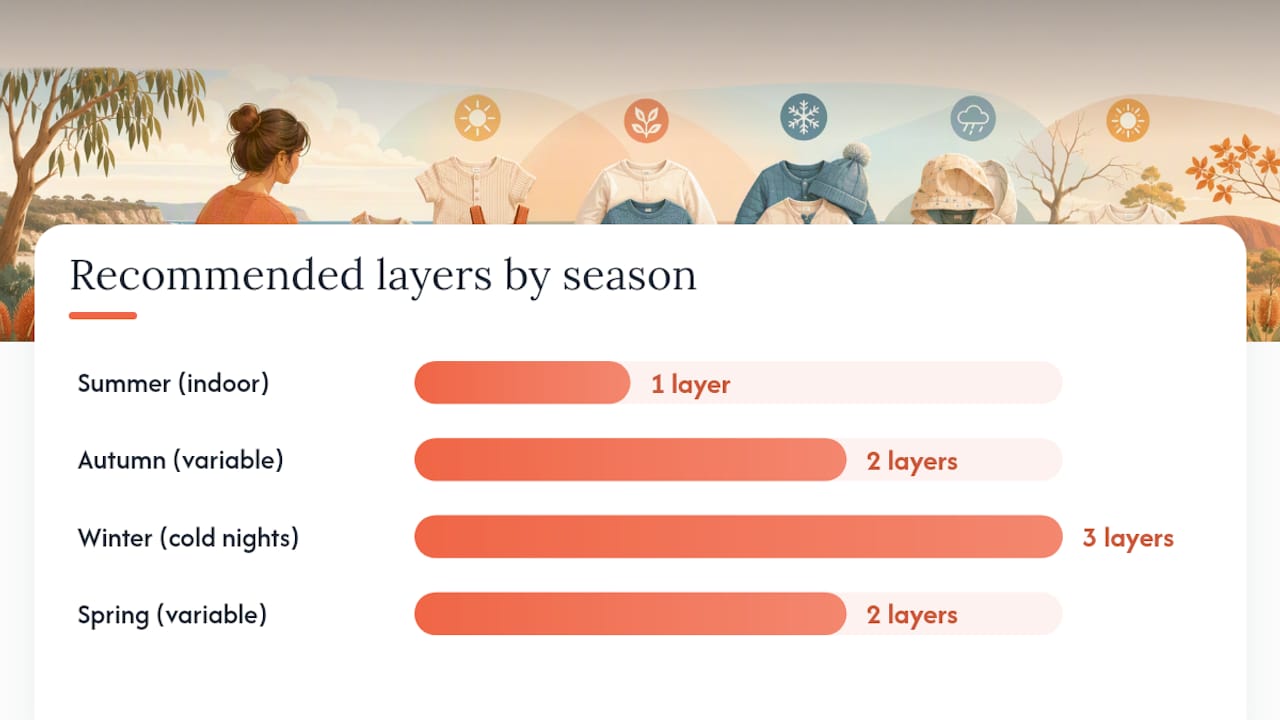
Winter (cool to cold nights): Layer a cotton bodysuit under a merino or cotton-fleece sleep suit, then add a sleeping bag rated for the room temperature. Avoid over-bundling: a baby who is too warm is a safety risk. Check the back of the neck, not the hands, to gauge temperature.
Autumn and spring (variable): These are the trickiest seasons. A cotton bodysuit plus a light merino layer, with a muslin wrap on standby, covers most temperature swings. For Australian winter dressing, merino is particularly useful because it adjusts as the temperature does.
Pro Tip: Keep a light organic cotton cardigan in your nappy bag year-round. Air conditioning in shops and cars can drop the temperature quickly, and a single extra layer is faster than repacking an entire bag.
Seasonal wardrobe checklist:
- Check the overnight room temperature before dressing for sleep (aim for 16–20°C).
- Start with a cotton bodysuit as the base layer in all seasons.
- Add a merino or cotton-fleece layer for temperatures below 18°C.
- Use a sleeping bag rated to the room temperature instead of loose blankets.
- For summer days, choose a single breathable cotton or muslin layer and a sun-protective hat.
- Pack a spare layer in the nappy bag for temperature changes during outings. A compact baby essentials bag makes carrying spare layers much easier.
How should you wash and care for baby clothes?
Laundering matters more than most parents expect. Research on textiles and skin outcomes shows that washing practices can reduce residue from dyes and manufacturing finishes, which is particularly relevant for babies with sensitive skin.
Detergent choice: Use a fragrance-free, enzyme-free detergent for all baby garments, especially in the first six months. Enzymes break down protein stains effectively but can irritate sensitive skin. Fabric softeners coat fibres and reduce breathability; skip them for cotton and bamboo.
Temperature: Most baby cotton washes well at 30–40°C. Higher temperatures (60°C) are useful for heavily soiled items but accelerate colour fade and shrinkage. Cold water is gentler on bamboo viscose and merino.
Drying: Air drying is the safest option for bamboo viscose and merino wool. Tumble drying on high heat shrinks merino and breaks down bamboo’s silky finish quickly. Cotton tolerates a warm tumble dry, but pulling garments out slightly damp and reshaping them reduces shrinkage.
Stain treatment: Rinse stains in cold water immediately; hot water sets protein stains (milk, food). A small amount of diluted dish soap on the stain before washing handles most baby messes without harsh chemicals.
What safety checks matter most for Australian baby clothing?
Fabric choice and garment safety overlap most clearly at bedtime. Australian mandatory standards classify children’s nightwear by fire danger and recommend close-fitting sleepwear as the lower-risk option for infants. Loose-fitting nightwear in fabrics that are not treated for fire resistance carries a higher fire danger rating.
What to check on sleepwear:
- Look for a label stating the garment meets Australian nightwear standards
- Close-fitting cotton or cotton-blend sleepwear is the standard recommendation for infants
- Avoid loose-fitting sleepwear in untreated synthetic fabrics for primary nightwear use
Overheating and SIDS risk: Paediatric guidance supports keeping infants in a comfortable thermal range and avoiding overheating as part of SIDS risk reduction. Check the back of the neck: warm and dry is right; hot and sweaty means remove a layer.
Trim and fastening hazards:
- Avoid garments with long ties, drawstrings at the neck, or loose decorative elements that could detach
- Press studs and poppers should be firmly attached; test them before dressing a newborn
- Buttons on decorative items should be stitched securely; if they feel loose, remove the garment from rotation
Sizing: Clothing that is too large bunches around the face during sleep. Size for the baby’s current weight, not the next size up, for sleepwear specifically.
How do you build a practical baby wardrobe without overbuying?
The most common mistake is buying too many items in newborn size before the baby arrives. Newborns grow fast, and a well-chosen small wardrobe in a mix of fabrics serves better than a large one in a single material.
Starter wardrobe by fabric:
- 6–8 organic cotton bodysuits (short and long sleeve): the daily workhorse; wash frequently, so having enough to rotate matters
- 3–4 cotton or bamboo sleepwear pieces: close-fitting for safety; replace as the baby grows
- 2–3 merino or cotton-fleece layers: for cool weather and layering over bodysuits
- 2–3 muslin wraps: multi-use for swaddling, sun shade, and light layering
- 4–6 pairs of cotton socks and 2 hats: easy to lose; buy more than you think you need
When to spend more: GOTS-certified organic cotton is worth the investment for garments worn directly against skin all day (bodysuits, sleepwear). For outer layers and pram suits that don’t touch skin directly, a well-made cotton jersey or cotton-blend is perfectly acceptable.
Mixing fabrics for a capsule wardrobe: A practical combination pairs organic cotton bodysuits and rompers for daytime with bamboo viscose or close-fitting cotton for sleep, and adds merino layers for cooler months. The Kite range at Baby Goes Retro follows exactly this logic: GOTS organic cotton bodysuits and dungarees for active days, with merino options for cooler layering.
Shopping checklist:
- Check snap or popper fastenings at the crotch (quick nappy changes matter at 3 AM).
- Look for envelope or wide necklines for easy over-the-head dressing.
- Read the care label before buying: if it says “dry clean only,” put it back.
- Buy the current size, not the next size up, for sleepwear.
- Check the returns policy before ordering online; Baby Goes Retro offers 30-day easy returns and exchanges.
What 17 years of dressing babies in organic fabrics taught us
Most fabric guides treat certification as a nice-to-have. At Baby Goes Retro, we’d push back on that. Since 2007, we’ve seen the difference that GOTS-certified organic cotton makes for babies with sensitive skin, and it’s not subtle. The parents who come back season after season are almost always the ones who started with certified organic basics and built from there.
The other thing worth saying plainly: European organic brands set a consistently higher bar for both fabric quality and garment construction than most mass-market alternatives. Flat seams, secure poppers, and honest fibre labelling are standard in the ranges we stock, not premium extras. That’s the practical reason we curate from ethical European makers rather than chasing the cheapest price point.
Shipping is $7.95 flat anywhere in Australia, free on orders over $97, and returns are open for 30 days. We think that removes most of the risk from trying a new brand or fabric type.
Where to start buying ethical baby fabrics in Australia
The three pieces below are a good entry point into the guide’s recommendations, each chosen for fabric, construction, and practical use.
The Kite Pig Pannage Long Sleeve Bodysuit is made from GOTS-certified organic cotton with popper fastenings at the crotch. It’s the kind of everyday bodysuit that earns its place through sheer reliability: soft against newborn skin, easy to wash at 40°C, and built to survive the rotation of daily changes.
The Kite Koala Time Baby Gift Bundle brings together a set of soft organic essentials in one ready-to-go package. It’s a practical starting point for parents building a first wardrobe, or a genuinely useful gift that skips the guesswork on fabric quality.
For active toddlers, the Kite Pear-fect Dungaree Toddler Bundle pairs organic cotton durability with a design that holds up to crawling, climbing, and the washing machine. Reinforced construction and vibrant colour make it a wardrobe staple rather than a one-season buy.
All three ship for $7.95 flat across Australia (free over $97) with 30-day returns. Browse the full organic kidswear range at Baby Goes Retro.
Sources
- Children’s nightwear guide
- Dressing babies & baby clothes guide | Raising Children Network
- How to buy the best baby clothes
FAQ
What is the safest fabric for newborn clothing?
GOTS-certified organic cotton is the most widely recommended fabric for newborns: it’s breathable, free from restricted chemicals, and tolerates frequent washing. For sleepwear, close-fitting cotton meets Australian nightwear safety standards.
Is bamboo fabric good for babies?
Bamboo viscose is soft and moisture-wicking, making it a good choice for warm-night sleepwear and sensitive skin. Look for OEKO-TEX Standard 100 certification on the finished garment, as the manufacturing process uses chemical solvents.
How many layers should a baby wear?
Raising Children Network advises dressing a baby in roughly one more layer than an adult, then adjusting for room temperature and activity. For sleep, aim for a room temperature of 16–20°C and use a sleeping bag rated to that range instead of loose blankets.
What should I avoid in baby clothing fabrics?
Avoid loose-fitting synthetic sleepwear without a fire-danger rating, garments with long ties or drawstrings at the neck, and fabrics with strong dyes or finishes that haven’t been tested to OEKO-TEX Standard 100. Fabric softeners reduce breathability and are best skipped for baby garments.
Where can I buy certified organic baby clothes in Australia?
Baby Goes Retro stocks GOTS-certified organic cotton and ethically sourced European brands, with flat-rate shipping of $7.95 across Australia (free over $97) and 30-day returns. The Kite Pig Pannage Long Sleeve Bodysuit is a good starting point for everyday organic cotton wear.
0 comments